A course for pathologists & AI practitioners

AI for pathology,
from implementation to impact.

Whether you are a pathologist finding your way through the fast-paced, revolutionary field of AI, or an AI practitioner looking to make an impact in healthcare, this course explores the intricate connections between the two. It starts with the medium pathologists know best — the tissue — and applies the recent advances in machine learning to open new ways of exploring and interrogating human biology, with applications across diagnosis, prognosis, and predictive medicine.

  • 11lectures
  • 6supporting demos and tutorials
  • Freefor students and healthcare professionals

Who this is for

One course, for the two sides of the room.

Most material assumes you already speak either medicine or machine learning. This course meets you on the side you know and carries you across.

You're a pathologist

Understand the models, not just the marketing.

Learn what these systems are, what they actually do to a slide, where they fail, and how to judge a vendor's claims with the same rigour you bring to a diagnosis.

  • Speak the language of data scientists
  • Learn about the different types of AI models
  • Read model performance the way you read a study
  • Evaluate, pilot, and validate AI tools in your lab
You're an AI practitioner

Learn the tissue before you model it.

Understand where the data comes from — fixation, staining, scanning — where AI can add value, and why clinical validation and regulation decide whether a model ever reaches a patient.

  • Grasp the slide lifecycle from specimen to pixel
  • Understand the questions AI can answer and where it is most impactful
  • Handle gigapixel WSIs, stain variation, and different labels
  • Design validation that survives regulatory rigour

What you'll be able to do

Capabilities you can put to work, not just concepts.

01

Frame the problem

Map a clinical need to the right AI task — detection, grading, biomarker scoring, prognosis, or prediction — and its deployment strategy.

02

Build the data pipeline

Take raw slides through tiling, stain normalisation, quality control, and feature extraction into analysis-ready data.

03

Choose the architecture

Reason about CNNs, vision transformers, graph networks, and multimodal fusion — and when each earns its place.

04

Validate for the clinic

Design splits, metrics, and external cohorts that hold up to regulatory-grade scrutiny and real-world drift.

05

Deploy and integrate

Ship models into the LIS with MLOps, monitoring, and change-control that hospitals and clinicians will actually accept.

06

Make the case

Weigh ROI, reimbursement, ethics, and equity so a tool can survive beyond the pilot and reach patients.

Curriculum

Eleven lectures, from tissue to precision medicine.

Build the technical foundations, understand the domain, then put both to work across real diagnostic and prognostic practice. Tap any lecture to expand.

Introduction
00 Introduction: AI for Pathology

What digital and computational pathology are, why they are emerging now, and a framework for classifying AI systems by clinical intent and methodological complexity.

  • What is digital pathology?
  • The converging revolutions behind AI pathology
  • A taxonomy of AI: clinical intent (Axis 1)
  • Methodological complexity (Axis 2)
  • Desirable properties of clinical AI systems
Part I — Building AI for Pathology: Technical Foundations
Part II — Clinical Applications, Adoption & the Future

The book behind the course

Every lesson is anchored in a written reference you keep.

The course follows AI in Pathology: From Implementation to Impact — a complete treatment of the field, from the physics of a stained slide to the economics of a deployed diagnostic. The chapters are your resource for deeper detail and a lasting reference long after the course ends.

  • Technical foundations & clinical practice in one arc
  • Worked case studies from real authorised tools
  • Regulation, ethics, and business models included
  • Written for both physicians and engineers
Get the course & book

Your instructors

Taught by the authors, across AI and pathology.

The course is led by the book's authors — a team working at the intersection of machine learning and diagnostic medicine.

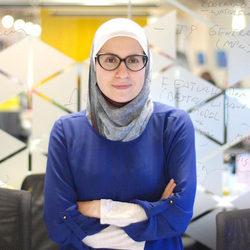
Noor Shaker

Noor Shaker

Lead author · AI & computational pathology

Founder of SpatialX, an AI precision medicine company, and a leader in AI for healthcare. A former assistant professor of AI, Noor works where machine learning meets medicine, and shapes the technical backbone of the course — from data and model architectures through validation and deployment.

LinkedIn ↗
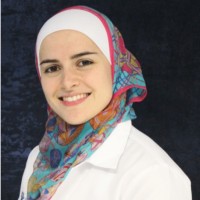
Nuha Shaker

Nuha Shaker

Co-author · Pathology & clinical practice

Board-certified pathologist and assistant professor at UPMC. Nuha grounds the course in day-to-day diagnostic practice — how tissue becomes a slide, how cases are read, and where AI genuinely helps at the bench — and guides its clinical applications and case studies.

LinkedIn ↗
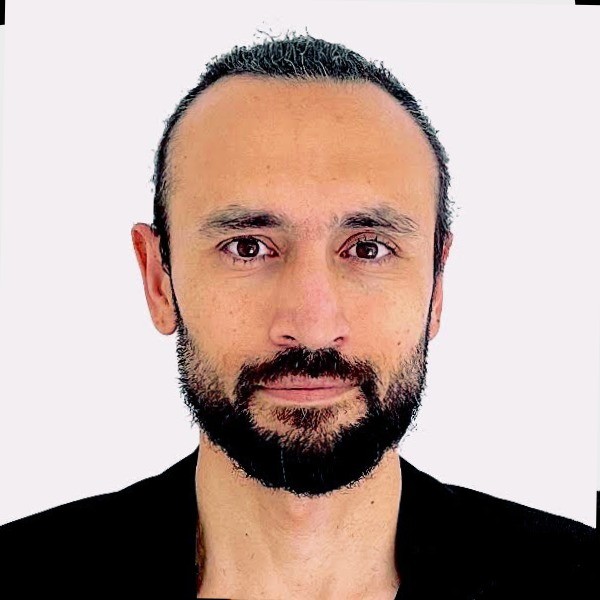
Mohamed AbouZleikha

Mohamed AbouZleikha

Co-author · AI & engineering

Co-Founder of SpatialX, an AI precision medicine company, and an AI expert. Mohamed focuses on the engineering that turns models into dependable clinical tools — the pipelines, architectures, and the MLOps and integration work that move AI from a notebook into the lab.

LinkedIn ↗

FAQ

Questions, answered.

Do I need to code to take this course?

No. The technical track explains methods conceptually, then shows how to choose and use them. Clinicians can follow the reasoning without writing code; engineers get the depth to decide which models to use.

Do I need a medical background?

No. The clinical track introduces the slide lifecycle, staining, and diagnostic practice from first principles, so AI practitioners can start from zero on the pathology side.

Is the book included?

No — you can buy the book AI in Pathology: From Implementation to Impact separately and use it as a reference, but you don't need it to follow the course.

How is the course delivered?

Self-paced video lectures that follow the eleven-module curriculum, with supporting demos, references to relevant case studies, and checkpoints.

Will this help me deploy AI in my own lab?

That's the point of the second half. You'll cover validation, MLOps, LIS integration, regulation, and the economics of getting a tool past the pilot stage.

Enrol

Start reading tissue with AI.

Join pathologists and machine-learning practitioners building the next generation of diagnostic tools. Leave your email and we'll send enrolment details.